What Is Causing My Acne? A Trigger Checklist That Works
By the Acnera Team (how we write) · Updated · 6 min read
If you're asking "what is causing my acne?", the base answer is clogged pores. The American Academy of Dermatology puts it simply: acne develops when pores become clogged. The more useful question is what's tipping your skin into clogging right now, and that usually comes down to one or two triggers you can identify.
Most people guess. They swap three products, cut out dairy, and change pillowcases in the same week, then can't tell which change did anything. This guide works through the triggers in order of how often they matter, and shows you how to test each one.
Short on time? Take the 2-minute acne trigger quiz to see which triggers fit your answers.
The short answer: the most common acne triggers
| Trigger | Evidence | Clue it's yours |
|---|---|---|
| Hormones | Strong | Flares at the same point in your cycle, or after starting or stopping birth control |
| New skincare, makeup, or hair products | Strong | Breakouts start within weeks of a new product, where you apply it |
| Stress | Moderate | Flares during exams, deadlines, or a rough month |
| Poor sleep | Moderate (mostly correlational) | Bad-sleep weeks line up with bad-skin weeks |
| Diet (high-glycemic foods, milk) | Mixed | Patterns after specific foods over weeks, not one meal |
| Medications | Strong for specific drugs | Acne started after a new prescription |
| Smoking | Moderate | Smokers have more, and more severe, acne |
| Genetics | Strong | Close relatives had severe acne |
1. Hormones
Hormones are the biggest driver for many teens and adults. Androgens make oil glands larger and more active, and the AAD lists periods, pregnancy, perimenopause, and starting or stopping birth control as times when shifting hormones trigger breakouts. In one study, 44% of women had premenstrual flares.
Test it: log your period alongside your skin for two or three cycles. Our guide to hormonal acne covers what to do if the pattern fits.
2. Products on your face and hair
The AAD names oily makeup, skin care, and hair products like pomade as things that can worsen acne. Heavy oils and certain esters show up most often on pore-clogging ingredient lists. Hair products are easy to overlook: if your breakouts follow your hairline, check your conditioner, oil, or styling product.
Using too many active treatments can backfire too. The AAD warns that trying new acne treatments too often can irritate your skin and cause breakouts, and some combinations shouldn't be layered at all.
Test it: change one product at a time, note the date, and give it three to four weeks. If you just started a retinoid or exfoliating acid, read purging vs breakout first.
3. Stress
The AAD says stress may worsen existing acne and that acne severity rises as stress increases. In a study of university students, acne got worse during exams, and the increase tracked how stressed students felt. More in our stress acne guide.
Test it: rate your stress daily on a 1 to 5 scale. Look for flares a few days after high-stress stretches.
4. Sleep
The AAD lists not getting enough sleep among things that worsen acne, and studies link poor sleep with more severe acne, though mostly through correlation. Our full breakdown: does sleep affect acne?
Test it: log hours slept each night for four weeks and compare your worst-sleep weeks with your skin.
5. Diet
Diet is the most argued-about trigger, and the evidence is mixed:
- In a 2007 randomized trial, 43 men with acne who followed a low-glycemic-load diet for 12 weeks had a bigger drop in acne lesions than those on a high-glycemic diet. They also lost weight, which the authors couldn't rule out as the reason.
- A 2019 randomized trial of 84 people found that adding a low-glycemic-load diet to benzoyl peroxide didn't improve acne counts more than benzoyl peroxide alone.
- A 2019 meta-analysis of observational studies linked milk, including skim and low-fat milk, with acne. Yogurt and cheese showed no significant link.
So a few people may see a difference from cutting back on sugary foods or milk, and many won't. We dig into the milk research in does dairy cause acne? If you try it, change one thing for at least six weeks and keep everything else the same.
6. Medications, smoking, and genetics
- Medications: acne is a side effect of some medicines, according to the AAD. Don't stop a prescription on your own. Ask the doctor who prescribed it.
- Smoking: the AAD notes that smokers are more likely to have acne, and more of it the more they smoke.
- Genetics: having parents or close relatives with severe acne raises your risk. You can't change it, but it's a reason to see a dermatologist earlier rather than later.
Why am I breaking out all of a sudden?
A sudden flare usually means something changed in the last few weeks. Run through this list:
- A new product, including hair products, sunscreen, or makeup
- Starting a new active ingredient (possible purging)
- Where you are in your cycle, or a change in birth control
- A stressful stretch or several short nights
- A new medication
- Hot, humid weather and sweating, which can also set off fungal acne, a different condition that looks similar
Why am I breaking out around my mouth?
Acne around the mouth and chin is often hormonal, but check two other causes. Lip balms and heavy creams can clog pores in that area. And a rash of small red bumps around the mouth, nose, or eyes may be perioral dermatitis, which the AAD describes as an acne-like rash often linked to using corticosteroid creams on the face. It needs different treatment from acne, so see a dermatologist if that sounds familiar.
How to find your trigger
Memory isn't good enough for this. You need a log:
- Pick a start date and keep your skincare the same for four weeks.
- Log the suspects daily: sleep, stress, cycle, anything new you ate, wore, or applied.
- Photograph your skin every few days in the same light.
- Compare flare-ups against the log. A trigger usually shows up a few days to a couple of weeks before the breakout.
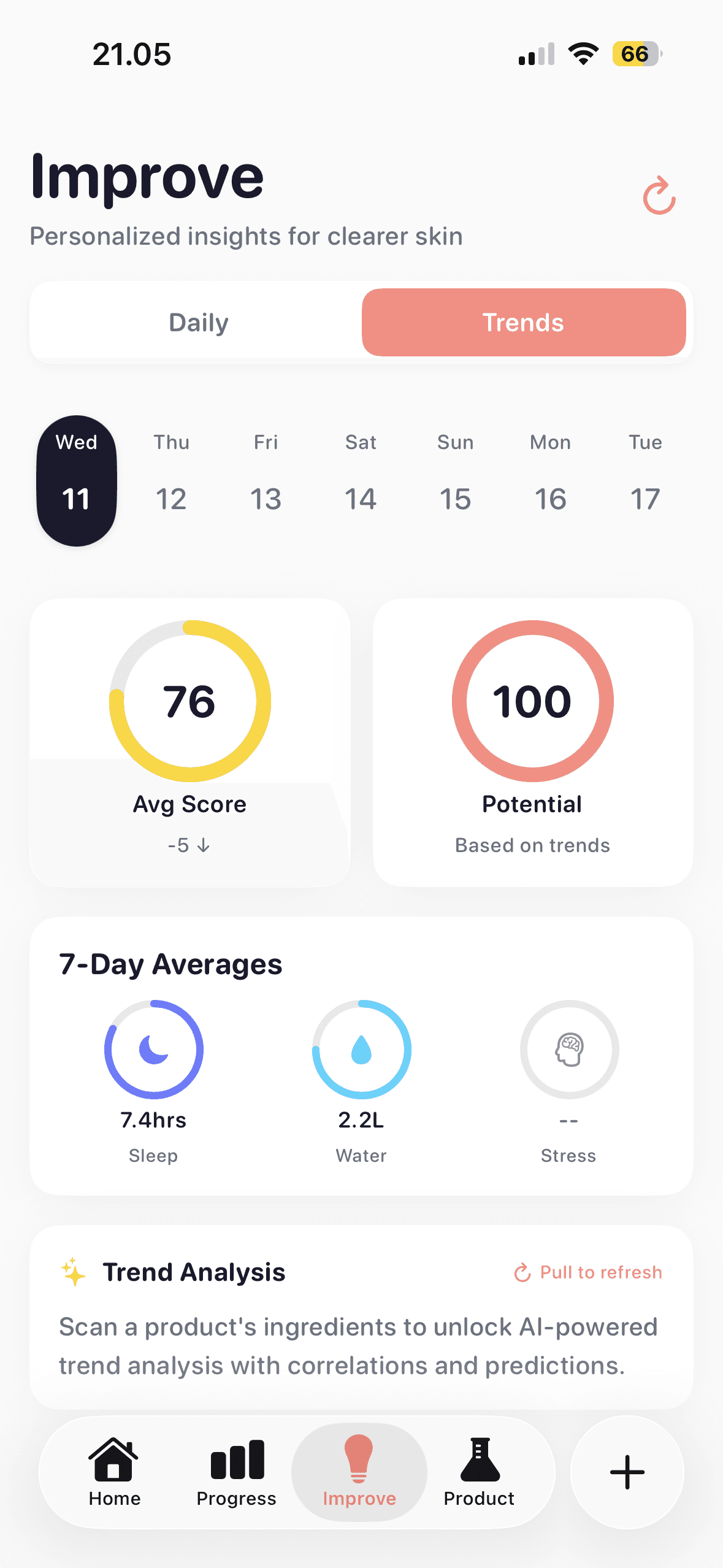
Acnera was built to run this experiment for you. The daily check-in takes a few taps, and the trend analysis compares your habits with your skin score over time, so the pattern is visible instead of guessed.
If nothing in your log explains your acne, or it's painful, deep, or leaving scars, see a dermatologist. The AAD says to get help if you keep breaking out despite trying plenty of treatments.
Once you have a suspect, the free trigger experiment planner turns it into a dated test with photo days.
Frequently asked questions
What is causing my acne?
Acne forms when pores clog with oil and dead skin cells. The most common triggers that tip skin into breaking out are hormones, pore-clogging products, stress, poor sleep, certain medications, smoking, and genetics. Diet plays a role for some people.
Why am I breaking out so bad all of a sudden?
A sudden flare usually follows a recent change: a new product or active ingredient, your menstrual cycle or birth control, a stressful period, short sleep, a new medication, or hot and humid weather. Think back over the last two to four weeks.
What are the most common acne triggers?
Hormonal changes and pore-clogging skin, makeup, or hair products are the most common. Stress and poor sleep can make existing acne worse, and some medications and smoking are also linked to acne.
Can food cause acne?
For some people, possibly. Studies link milk and high-glycemic diets with acne, but the evidence is mixed, and one 2019 trial found no added benefit from a low-glycemic diet alongside benzoyl peroxide. Test one change for six weeks or more.
Why am I breaking out on my chin and around my mouth?
Chin and jawline breakouts are often hormonal. Lip balms and heavy creams can also clog pores there. Small red bumps around the mouth, nose, or eyes may be perioral dermatitis instead of acne, which needs different treatment.
Is there a quiz to find out what's causing my acne?
Quizzes give generic answers because they can't see your patterns over time. A few weeks of logging your sleep, stress, cycle, and products alongside regular skin photos will tell you far more about your own triggers.
This article is for general education and isn’t medical advice. If your acne is severe, painful, scarring, or not improving, see a board-certified dermatologist.