Fungal Acne vs Regular Acne: How to Tell Them Apart
By the Acnera Team (how we write) · Updated · 5 min read
Fungal acne vs regular acne comes down to three clues: fungal acne itches, its bumps all look the same, and it doesn't have blackheads or whiteheads. Despite the name, fungal acne is a different condition called Malassezia folliculitis: an overgrowth, inside your hair follicles, of a yeast that normally lives on your skin.
The treatments differ too. Antibiotics for acne can make fungal acne worse, and antifungals aren't a treatment for regular acne.
The short answer
| Fungal acne (Malassezia folliculitis) | Regular acne | |
|---|---|---|
| Cause | Overgrowth of Malassezia yeast in hair follicles | Clogged pores, oil, bacteria, inflammation |
| Itch | Usually itchy | Usually not itchy (can be sore) |
| Look | Small bumps and pustules, all about the same size | Mixed sizes, from blackheads to deep cysts |
| Blackheads and whiteheads | No | Yes, usually |
| Where | Upper back, chest, forehead, chin, neck, upper arms | Face, chest, back |
| Made worse by | Heat, humidity, sweat, heavy moisturizers, antibiotics | Hormones, pore-clogging products, stress |
| Treated with | Antifungals | Retinoids, benzoyl peroxide, antibiotics, hormonal therapy |
Not sure which one you have? Run through the free fungal acne checker. It takes about two minutes.
What fungal acne looks like
DermNet, the dermatology reference site, describes Malassezia folliculitis as small, uniform, itchy papules and pustules, most often on the upper back and chest, and also on the forehead, chin, neck, and the backs of the upper arms. Dermatologists call this a "monomorphic" rash: every bump looks like the others.
Regular acne is messier. You'll usually see a mix of blackheads, whiteheads, red bumps, and sometimes deeper painful lumps, all at different stages.
Does fungal acne itch?
Usually, yes. Itch is one of the most useful clues, since regular acne tends to be sore rather than itchy. Some people with fungal acne don't itch much, so itch alone can't rule it in or out.
Why fungal acne happens
Malassezia yeast lives on almost everyone's skin. It turns into a problem when conditions let it overgrow. DermNet lists the main risk factors:
- Hot, humid climates and heavy sweating
- Oily skin
- Occlusive moisturizers and sunscreens
- Antibiotic use, which can reduce the bacteria that keep yeast in check
- Steroid use or a weakened immune system
The antibiotic link makes a misdiagnosis costly. A 2025 review notes that it closely mimics acne, which often leads to inappropriate antibiotic use. If someone with fungal acne is prescribed acne antibiotics, the yeast can face even less competition, and the rash can get worse.
How fungal acne is diagnosed
A dermatologist can often suspect it from how it looks and where it is. To confirm it, they may look at skin scrapings under a microscope, use a special lamp, or try an antifungal treatment and watch the response, according to the 2025 review.
Fungal acne has become a social media trend, and a 2026 review in the Journal of Drugs in Dermatology raised concern about people applying antifungals without a confirmed diagnosis. If you suspect it, it's worth getting checked, especially if your "acne" hasn't responded to months of acne treatment.
How fungal acne is treated
Treatment uses antifungals. DermNet lists topical options including selenium sulfide shampoo, econazole solution, and ketoconazole, and notes that oral antifungals such as fluconazole can be more effective than topical treatment in some cases. Oral antifungals need a prescription.
You'll see dandruff shampoo recommended a lot online. That's because some dandruff shampoos contain selenium sulfide or ketoconazole, the same antifungals used for Malassezia folliculitis. Ask a pharmacist or dermatologist how to use one on your skin before trying it.
Does fungal acne come back?
Often, yes. DermNet notes that recurrence is common even after successful treatment, which is why dermatologists sometimes suggest ongoing preventive treatment for people prone to it. Cutting back on heavy moisturizers and showering soon after sweating can help reduce flare-ups.
Can you have both at once?
Yes. Fungal acne is more common in people who already have acne, according to the 2026 review. If some of your bumps behave like acne and others itch and look identical, mention both patterns to your dermatologist.
Track it before your appointment
Fungal acne is easy to confuse with acne in a single mirror check, and much easier to spot over time. Before you see a dermatologist:
- Photograph the area every few days in the same light.
- Note when it itches and when it flares, such as after workouts, hot weather, or a new moisturizer.
- Write down every treatment you've tried and for how long, especially antibiotics.
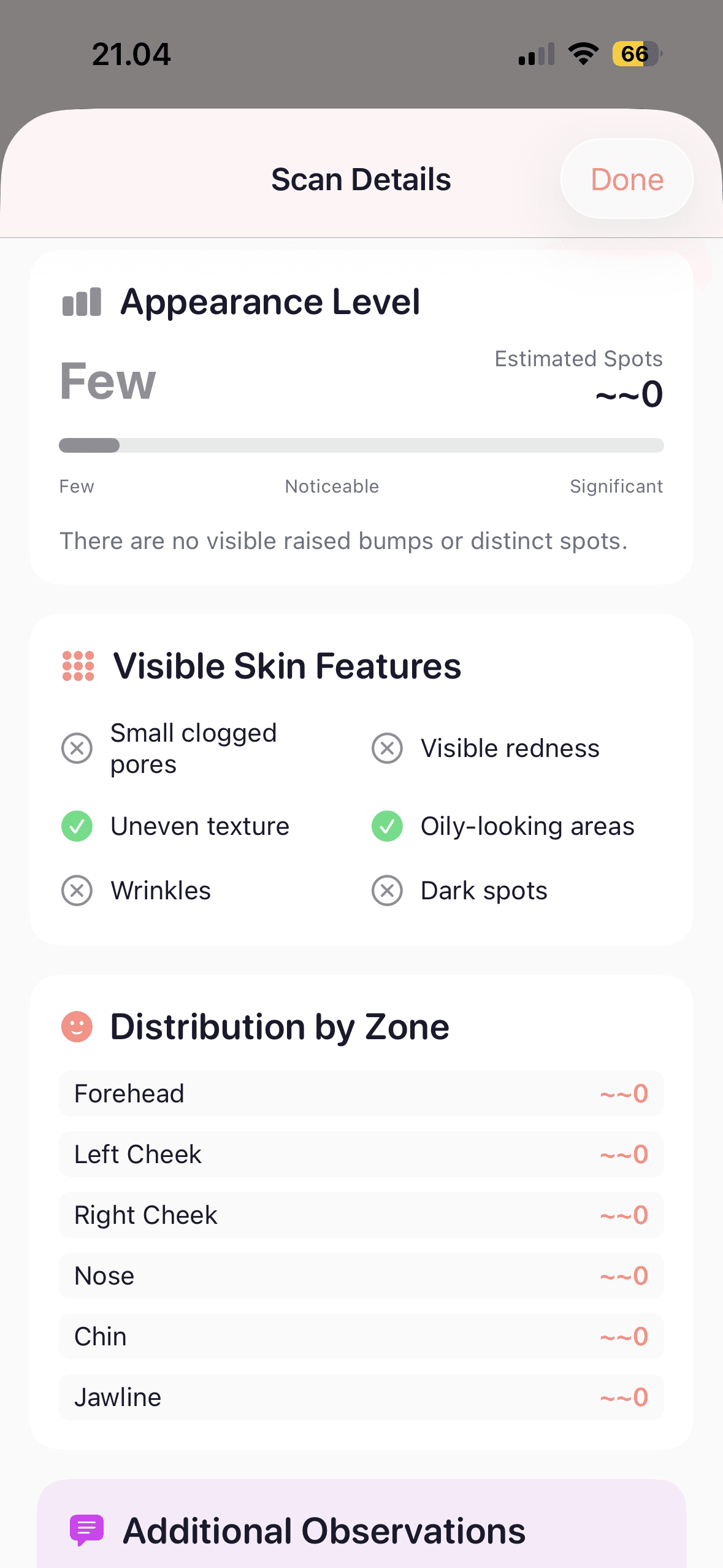
Acnera's AI skin scan records visible features like redness, uneven texture, and clogged pores zone by zone, and keeps a dated photo history you can show your dermatologist. It doesn't diagnose fungal acne, but it gives a doctor a much clearer picture than "it's been bad for a while".
If your skin seems to flare with sweat and heat rather than products, our guide to what's causing your acne walks through the other triggers to rule out. And if you're about to add new products, check them for pore-clogging ingredients first.
Frequently asked questions
What is the difference between fungal acne and regular acne?
Fungal acne (Malassezia folliculitis) is a yeast overgrowth in hair follicles. It usually itches, forms small bumps that all look alike, and has no blackheads or whiteheads. Regular acne comes from clogged pores and shows a mix of blackheads, whiteheads, and inflamed spots of different sizes.
What does fungal acne look like?
Fungal acne looks like clusters of small, uniform red bumps and pustules, often on the upper back, chest, forehead, chin, or neck. The bumps are usually itchy and all about the same size.
Does fungal acne itch?
Usually, yes. Itching is one of the main features that separates fungal acne from regular acne, which tends to be sore rather than itchy. Not everyone with fungal acne itches, though.
Can fungal acne be on the forehead?
Yes. Fungal acne commonly appears on the forehead, as well as the upper back, chest, chin, neck, and upper arms. Forehead breakouts that itch and look uniform, especially in hot weather, are worth checking.
Does dandruff shampoo help fungal acne?
Some dandruff shampoos contain antifungals such as selenium sulfide or ketoconazole, which are used to treat Malassezia folliculitis. Get a diagnosis first, and ask a pharmacist or dermatologist how to use it on your skin.
Can fungal acne go away on its own?
It often needs antifungal treatment, and it frequently comes back even after treatment. Reducing heat, sweat, and heavy moisturizers can help, but see a dermatologist if it persists.
This article is for general education and isn’t medical advice. If your acne is severe, painful, scarring, or not improving, see a board-certified dermatologist.