Does Dairy Cause Acne? What the Studies Actually Found
By the Acnera Team (how we write) · Updated · 5 min read
Does dairy cause acne? Not for everyone, and nobody has proven that it causes acne at all. But milk, including skim milk, is linked to acne in study after study, and people who drink more of it tend to have more acne. The evidence for cheese and yogurt is much shakier.
So the honest answer is "possibly, for some people," and the useful one is that it's easy to test on yourself.
The short answer
- Milk has the most consistent link to acne, including low-fat and skim milk.
- More milk, higher odds. In one large analysis, a glass a day or more was linked to clearly higher odds of acne than drinking milk less than weekly.
- Cheese and yogurt are uncertain. One meta-analysis found a link and another didn't.
- It's all observational. These studies show an association, not cause and effect, and some of the effect shrank after adjusting for other factors.
- The American Academy of Dermatology suggests testing it, not banning dairy outright.
What the biggest studies found
Two meta-analyses have pooled the research on dairy and acne.
The first, published in Nutrients in 2018, combined 14 studies of 78,529 children, adolescents, and young adults aged 7 to 30. Compared with no intake, the odds of acne were:
| Type of dairy | Odds of acne vs no intake |
|---|---|
| Any dairy | 1.25 times higher |
| Any milk | 1.28 times higher |
| Low-fat or skim milk | 1.32 times higher |
| Whole milk | 1.22 times higher |
| Yogurt | 1.36 times higher |
| Cheese | 1.22 times higher (not statistically significant) |
The same study looked at how much milk people drank. Compared with drinking milk less than once a week, odds of acne were 1.41 times higher at one glass a day and 1.43 times higher at two or more glasses a day. Two to six glasses a week wasn't a significant difference.
The second, a 2019 meta-analysis in Clinical Nutrition, also found that milk, including low-fat and skim milk, was associated with acne. But it found no significant link for yogurt or cheese, which disagrees with the 2018 analysis on exactly those foods.
The American Academy of Dermatology summarizes one widely cited finding this way: women who drank two or more glasses of skim milk a day were 44% more likely to have acne.
Why the evidence is weaker than it sounds
The research behind "dairy causes acne" headlines has real limits:
- They're observational. Researchers asked people what they ate and whether they had acne. That can't separate dairy from everything else that differs between heavy and light milk drinkers.
- Adjusting for other factors weakened the results. The 2018 authors note that adjusted results were attenuated compared with unadjusted ones.
- There was publication bias. The same analysis found signs that studies showing a link were more likely to be published.
- Diet is hard to measure. Most studies relied on people remembering what they ate, sometimes years earlier.
Researchers have proposed that hormones and growth factors naturally found in milk could play a role, which would explain why skim milk shows up as strongly as whole milk. That idea hasn't been proven.
What about sugar and high-glycemic foods?
The other diet suspect is high-glycemic food, like white bread, sugary drinks, and fries. The evidence there is mixed too. A 2007 randomized trial found that 43 men with acne on a low-glycemic diet had fewer lesions after 12 weeks than those on a high-glycemic diet, though they also lost weight. A 2019 trial found that adding a low-glycemic diet to benzoyl peroxide didn't improve acne counts more than benzoyl peroxide alone. We cover the rest of the trigger evidence in what's causing my acne.
Should you cut out dairy for acne?
The AAD's advice is to pay attention to your breakouts and ask whether any food seems to trigger them, then test it by avoiding that food for a while. It also stresses that diet changes alone usually aren't enough: effective acne treatment still means skin care and, often, medication.
If you want to try it, run it as an experiment:
- Keep everything else the same. Same skincare, same products. If you change three things at once, you won't know which one worked.
- Cut back on milk first, since that's where the evidence is most consistent. You don't need to drop every dairy food on day one.
- Give it at least six weeks. Acne changes slowly, and the AAD says treatments take 6 to 8 weeks to show results.
- Take progress photos the same way every few days. Our guide to acne progress pictures shows how.
- Reintroduce it and watch. If your skin clearly improves without milk and worsens when it comes back, you have your answer.
If you cut down on dairy long term, make sure you still get enough calcium and vitamin D from other foods. A doctor or dietitian can help.
Track it instead of guessing
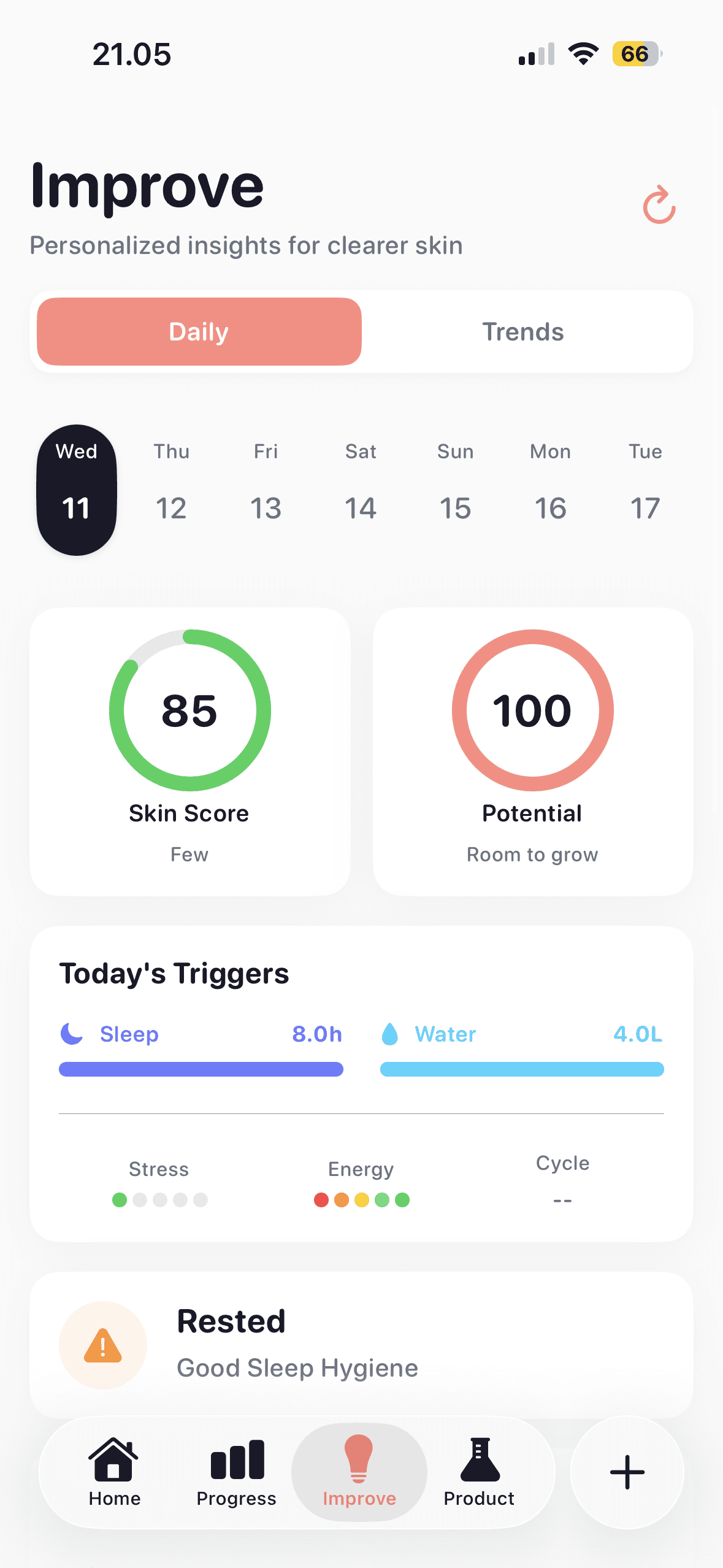
Diet triggers are hard to spot from memory, especially when your cycle, stress, and sleep are changing at the same time. Acnera's daily check-in logs your habits alongside your skin score, and the insights view shows which triggers line up with your flare-ups.
Not sure diet is even the right suspect? The 2-minute acne trigger quiz ranks your likeliest triggers from your answers.
If you want to test dairy on your own skin, the free trigger experiment planner builds a dated plan with photo days and a decision date.
Frequently asked questions
Does dairy cause acne?
Dairy hasn't been proven to cause acne, but milk is consistently linked to it in observational studies. A 2018 meta-analysis of 78,529 people found higher odds of acne with any milk, including skim milk, and the odds rose with how much people drank.
Is skim milk worse for acne than whole milk?
In the 2018 meta-analysis, low-fat and skim milk had slightly higher odds of acne (1.32) than whole milk (1.22). The AAD notes that all types of cow's milk have been linked to acne.
Do cheese and yogurt cause acne?
The evidence is unclear. One 2018 meta-analysis found yogurt was linked to acne and cheese was borderline, while a 2019 meta-analysis found no significant link for either.
How long after cutting dairy will acne improve?
Give it at least six weeks, and keep everything else in your routine the same. Acne changes slowly, so take progress photos to compare before and after.
Should I stop eating dairy if I have acne?
You don't have to. The American Academy of Dermatology suggests watching whether any food seems to trigger breakouts and testing it by avoiding it for a while. Diet changes work best alongside proper acne treatment, not instead of it.
Does chocolate cause acne?
The studies in this article didn't look at chocolate on its own. The best-studied diet links are with milk and high-glycemic foods, and even those are mixed.
This article is for general education and isn’t medical advice. If your acne is severe, painful, scarring, or not improving, see a board-certified dermatologist.