What Is Hormonal Acne? Causes, Timing, and Treatment
By the Acnera Team (how we write) · Updated · 5 min read
What is hormonal acne? It's acne that flares with changes in your hormones, most often around your period, during pregnancy, in perimenopause, or after starting or stopping birth control. The American Academy of Dermatology lists all of these as common causes of adult acne. Think of it as regular acne with a schedule. That schedule is useful, because once you can predict a flare, you can plan for it.
The short answer
- What it is: acne that gets worse when hormone levels shift, especially androgens ("male" hormones that everyone has).
- When it shows up: most commonly in the week before a period.
- How common it is: in a study of 400 women, 44% had premenstrual acne flares.
- What helps: standard acne treatments, plus hormonal options such as combined birth control pills or spironolactone, which a dermatologist can prescribe.
Which hormones cause hormonal acne?
Acne starts when pores clog. Androgens make oil glands larger and more active, and more oil means more clogged pores. The AAD explains that this is why acne often starts in puberty, when androgen levels rise.
Stress feeds into the same system. According to the AAD, your body produces more androgens in response to stress, which helps explain why a stressful month and a bad skin month so often line up. We wrote a separate guide on stress acne.
Acne before your period: when in your cycle it flares
Most hormonal acne follows the menstrual cycle. In a 2014 survey of adult women with acne, 65% said their acne got worse with their period. Among those women:
| When acne got worse | Share of women |
|---|---|
| The week before their period | 56% |
| During their period | 17% |
| After their period | 3% |
| Throughout the cycle | 24% |
So if you're asking "acne before period, how many days?", the most common answer is roughly the seven days before bleeding starts. Your own timing may differ, which is why it's worth tracking for two or three cycles before drawing conclusions.
Birth control changes the picture. Starting or stopping the pill can both trigger breakouts, according to the AAD. The 2001 study found that oral contraceptive use didn't change the rate of premenstrual flares in its participants.
How to tell if your acne is hormonal
There's no blood test that labels acne "hormonal". Dermatologists look at the pattern, and so can you:
- It follows your cycle. Breakouts arrive at roughly the same point each month.
- It started or changed with a hormonal event. New birth control, stopping birth control, pregnancy, postpartum, or perimenopause.
- It's adult-onset or came back in adulthood. More on that in our adult acne guide. The AAD notes that some adults get acne well into their 30s, 40s, and even 50s, and that adult-onset acne is most common in women going through menopause.
- It shrugs off products. Changing your cleanser does nothing, because the trigger is internal.
Where the spots appear is a weaker clue. Plenty of people notice hormonal flares along the chin and jawline, but location alone can't tell you the cause, and "face mapping" charts aren't backed by good research.
Acne alongside irregular periods, excess facial or body hair, or scalp hair thinning can be a sign of an underlying condition such as polycystic ovary syndrome. The AAD notes that acne is sometimes a sign of an undiagnosed medical condition. See a doctor if that combination sounds familiar.
What is the best treatment for hormonal acne?
The 2024 American Academy of Dermatology acne guidelines cover the full range:
- Strongly recommended for acne in general: benzoyl peroxide, topical retinoids, topical antibiotics, and oral doxycycline.
- Conditionally recommended, with hormonal options among them: combined oral contraceptive pills, spironolactone, and topical clascoterone (a cream that blocks androgens in the skin).
Hormonal treatments are prescription-only, so this is a conversation for a dermatologist or your doctor. Over-the-counter care still matters. A retinoid such as adapalene and a benzoyl peroxide wash treat the clogged pores that hormones help create, whatever the trigger.
When does hormonal acne stop?
There's no fixed age. For many people it eases after the teenage years, but the AAD notes that some adults keep getting acne into their 30s, 40s, and even 50s, and that the hormone swings of perimenopause and menopause can trigger it too. If it isn't stopping on its own, treatment works, so you don't need to wait it out.
Track your cycle against your skin
Hormonal acne is the easiest kind to plan for once you know your pattern. Log your period and take a quick face photo every few days for two or three cycles. If breakouts reliably land in the week before your period, you can start your spot treatment early and stop blaming your moisturizer.
Acnera's cycle tracker logs your period and predicts the next one. The trend analysis then lines your cycle up against your skin score, so you can see whether your flares follow your cycle, your sleep, or something on your shelf.
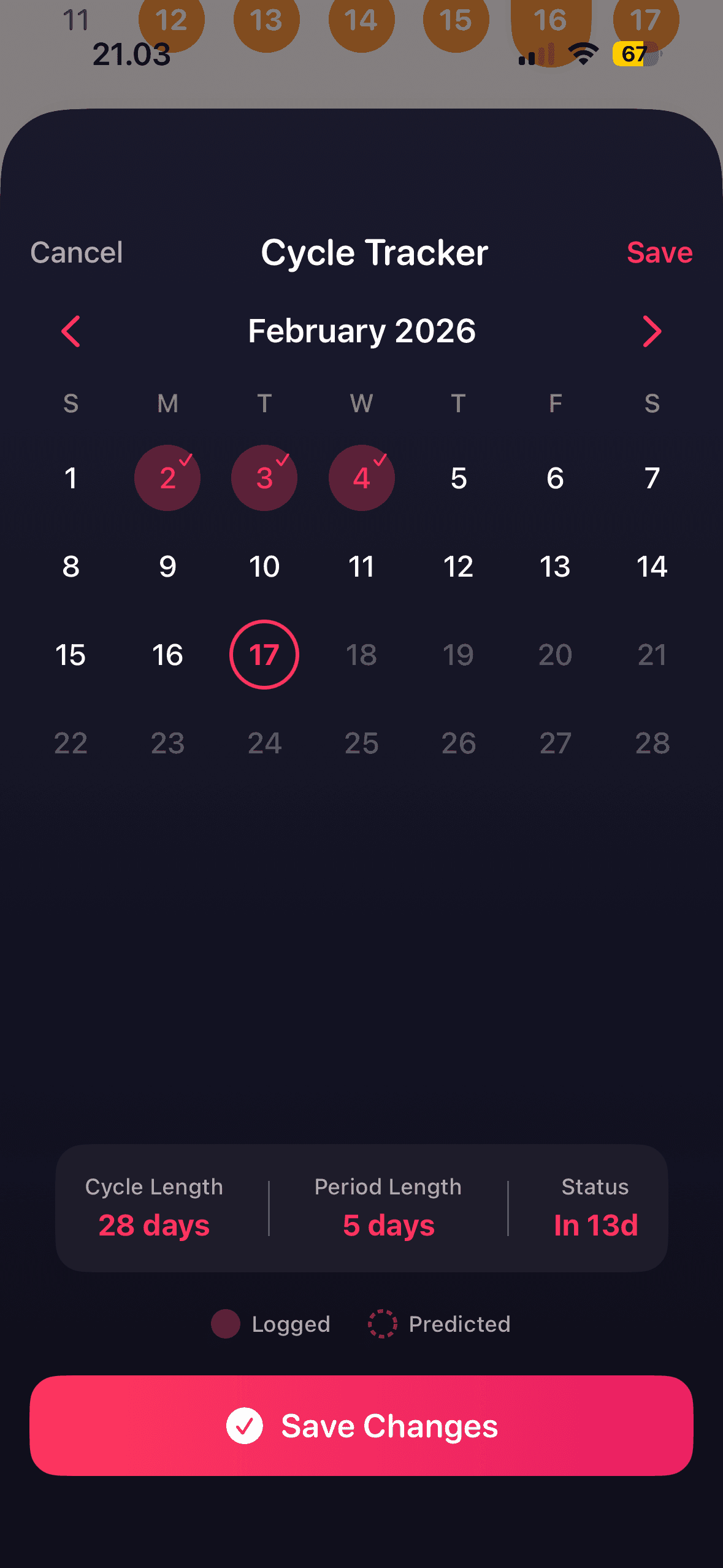
If your flares don't follow your cycle, look at the other usual suspects in our guide to what's causing your acne.
To see when your next flare is likely, enter your cycle in the free hormonal acne calendar and add the dates to your phone's calendar.
Frequently asked questions
What is hormonal acne?
Hormonal acne is acne that flares when hormone levels change, most often in the week before a period, during pregnancy, in perimenopause, or after starting or stopping birth control. Androgens drive more oil production, which leads to more clogged pores.
How many days before your period does acne start?
The most common pattern is the week before your period. In a 2014 survey, 56% of women with period-related acne said it got worse in the week before their period. Track two or three cycles to learn your own timing.
What hormone causes hormonal acne?
Androgens are the main hormones involved. They enlarge oil glands and increase oil production. Shifts in other hormones across the menstrual cycle, pregnancy, and menopause also change how much androgens affect the skin.
Does birth control help hormonal acne?
Combined oral contraceptive pills are one of the hormonal treatments the American Academy of Dermatology's 2024 guidelines recommend for acne. Starting or stopping birth control can also trigger breakouts, so talk to a doctor about which option suits you.
When does hormonal acne go away?
There's no set age. It often eases after the teenage years, but adult women can get hormonal acne into their 40s and 50s, including around menopause. Treatment can control it at any age.
Can men get hormonal acne?
Yes. Androgens drive oil production in everyone, which is why acne is so common in teenage boys. Men don't have a monthly cycle to track, so stress, sleep, and products are the more useful things to log.
This article is for general education and isn’t medical advice. If your acne is severe, painful, scarring, or not improving, see a board-certified dermatologist.