How Long Does It Take for Acne to Go Away?
By the Acnera Team (how we write) · Updated · 5 min read
How long does it take for acne to go away? With consistent treatment, acne usually takes 6 to 8 weeks to start improving and a few months to clear. The American Academy of Dermatology says it takes at least 6 to 8 weeks before you start to see fewer breakouts. Dark marks left behind can take 6 to 12 months to fade on their own.
That's slower than most people expect, and impatience is a common reason people quit treatments that would have worked. This guide covers realistic timelines for each stage and treatment, and how to tell if yours is on track.
The short answer
| What you're waiting for | Typical timeline |
|---|---|
| First signs a treatment is working | 6 to 8 weeks |
| Clear or mostly clear skin on treatment | Several months |
| Oral antibiotics (doxycycline and similar) | Usually several months, kept as short as possible |
| Isotretinoin course | About 4 to 5 months |
| Dark spots after acne fading | 6 to 12 months, longer if the color is deep |
How long does it take for acne treatment to work?
For over-the-counter and prescription treatments alike, plan on two months before judging results. The AAD's advice for at-home care is to give treatment time to work, since it may take several weeks to a few months to see a difference. The same page warns that switching treatments too often can irritate your skin and cause more breakouts.
What that looks like in practice:
- Weeks 1 to 4: little visible change, and possibly some dryness or irritation if you started a retinoid or acid. Some people notice a few extra spots early on, which may be purging or a breakout.
- Weeks 6 to 8: fewer new breakouts. Existing spots heal and fewer replace them.
- Months 3 and beyond: steady improvement. Keep going with what's working, since stopping often lets acne come back.
Timelines for common treatments
Benzoyl peroxide and topical retinoids
These are the backbone of acne treatment. The 2024 American Academy of Dermatology guidelines make strong recommendations for both. Expect the standard 6 to 8 weeks before you see fewer breakouts. Our guide to how to use adapalene covers starting a retinoid without the irritation. Retinoids treat the clogged pores that start acne, so they keep working long term.
Oral antibiotics
Dermatologists prescribe antibiotics for the shortest time needed, usually several months. The 2024 guidelines recommend limiting antibiotic use and combining it with topical treatments, so your skin stays clear after the antibiotic stops.
Isotretinoin
For severe or stubborn acne, the AAD says one course of isotretinoin takes about four to five months, and that it often clears acne for a long time, permanently for some people.
Hormonal treatments
Birth control pills and spironolactone are options for hormonal acne. They also take a few months to show their full effect, so ask your doctor what timeline to expect for your prescription.
How long does a single pimple take to go away?
A small pimple usually heals within days to a couple of weeks. Deep, painful bumps take longer, and picking or squeezing makes healing slower and raises the risk of marks and scars.
How long do acne marks take to fade?
Dark spots left behind after acne (post-inflammatory hyperpigmentation) are separate from active acne, and they take longer. The AAD says a spot a few shades darker than your skin usually fades within 6 to 12 months, and that deep color can take years. Daily sunscreen is the most important thing you can do. The same AAD page says it can prevent new dark spots and help clear existing ones.
Indented acne scars are different again. They don't fade on their own, and treatments for them are done by a dermatologist. Not sure which you have? See acne scars vs dark spots.
Why your acne isn't clearing
If you're past the 8-week mark with no improvement, check these:
- You've been switching products. Every switch resets the clock.
- Something is still triggering breakouts. A pore-clogging product, your cycle, stress, or poor sleep. See what's causing your acne.
- Your treatment is fighting itself. Some ingredients shouldn't be layered, like tretinoin with benzoyl peroxide.
- It might not be acne. Itchy, uniform bumps may be fungal acne, which acne treatments don't fix.
- You need a stronger treatment. The AAD recommends seeing a dermatologist if you keep breaking out despite trying plenty of treatments.
How to compare acne progress pictures
Because acne improves slowly, you'll barely notice the change day to day. Photos fix that, if you take them the same way every time (full guide: acne progress pictures):
- Same light. Face a window in daylight, or use the same bathroom light.
- Same angles. Front, left side, and right side.
- Same distance and time of day. Morning, before skincare, works well.
- Every few days, and compare week 0 to week 8, not yesterday to today.
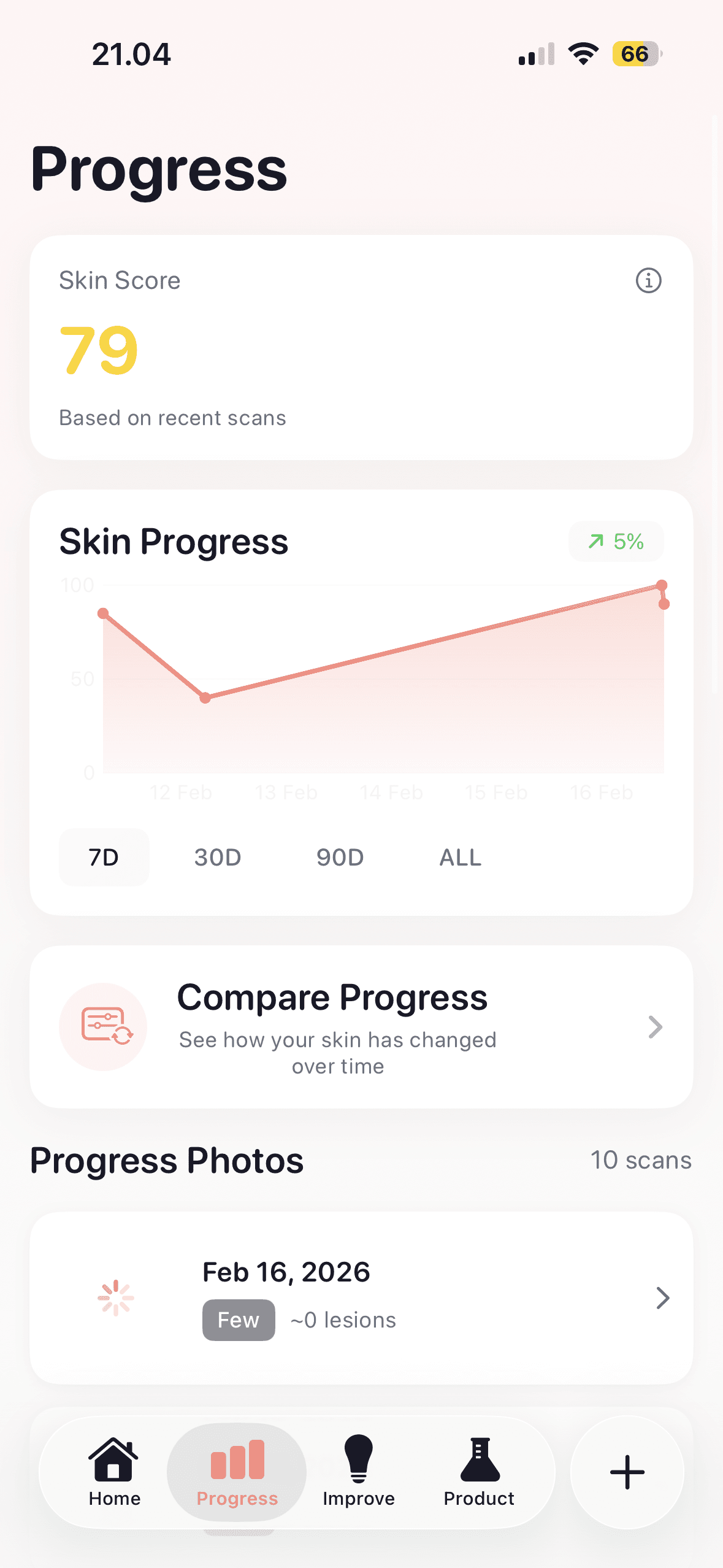
Acnera's progress view tracks your skin score over 7, 30, and 90 days, and the before and after slider lines up face-aligned photos so you're comparing like with like. It's an easy way to see whether a treatment is working before you give up on it at week three.
To get dated milestones for your own treatment, use the free acne treatment timeline calculator.
Frequently asked questions
How long does it take for acne to go away?
With consistent treatment, most people see fewer breakouts after 6 to 8 weeks, according to the American Academy of Dermatology, and clearer skin over several months. Dark marks left behind can take 6 to 12 months to fade.
How long does it take for acne to clear up with skincare?
Over-the-counter treatments such as benzoyl peroxide and adapalene usually need 6 to 8 weeks of daily use before you see fewer breakouts. Keep using them once your skin clears, since stopping often lets acne return.
How long does it take for acne to go away naturally?
Teenage acne often improves with time, but there's no reliable timeline, and some adults keep getting acne into their 30s, 40s, and 50s. Treatment is usually faster and lowers the risk of scarring.
How long does it take for a pimple to heal?
A small pimple usually heals within days to a couple of weeks. Deeper, painful bumps take longer, and picking at a pimple slows healing and increases the chance of a dark mark or scar.
How long does it take for acne dark spots to fade?
The American Academy of Dermatology says dark spots a few shades darker than your skin usually fade within 6 to 12 months. Deeper color can take years. Daily sunscreen helps them fade and prevents new ones.
How long does an isotretinoin course take?
The American Academy of Dermatology says one course of isotretinoin takes about four to five months, sometimes a little less or more.
This article is for general education and isn’t medical advice. If your acne is severe, painful, scarring, or not improving, see a board-certified dermatologist.