What Not to Mix With Salicylic Acid (and What Pairs Well)
By the Acnera Team (how we write) · Updated · 6 min read
What not to mix with salicylic acid comes down to one rule: don't stack it with other strong exfoliating or drying acne treatments in the same routine. That includes adapalene, tretinoin, other acids, and benzoyl peroxide. Niacinamide and hyaluronic acid are fine partners.
The warning is printed on the products themselves, which is more than most "never mix" lists can say.
The short answer
| Pair salicylic acid with | Verdict | What to do |
|---|---|---|
| Adapalene (Differin) | Use caution | Use them at different times of day, or alternate days |
| Tretinoin or retinol | Use caution | Retinoid at night, salicylic acid in the morning or on other nights |
| Benzoyl peroxide | Watch for dryness | Fine for many people, but drop to one if your skin gets irritated |
| Glycolic or lactic acid | Don't stack separate products | Alternate, or use one product that contains both at low strength |
| Azelaic acid | Usually fine, start slowly | Introduce one at a time |
| Vitamin C | Separate if sensitive | Vitamin C in the morning, salicylic acid at night |
| Niacinamide | Fine together | Layer away |
| Hyaluronic acid | Fine together | Layer away |
What the labels actually say
Unlike most mixing advice, this part comes from regulators.
In the US, over-the-counter acne products that contain salicylic acid or benzoyl peroxide have to carry an FDA-required warning: skin irritation and dryness is more likely to occur if you use another topical acne medication at the same time. The same rule tells you what to do about it: if irritation occurs, use only one topical acne medication at a time.
The prescribing information for Differin (adapalene) gel goes further. It says that particular caution should be exercised when using products containing sulfur, resorcinol, or salicylic acid with it, and to approach strongly drying soaps, cleansers, and astringents with caution too.
Neither label says the combination is dangerous or that the ingredients cancel each other out. Both say the same thing: two treatments that dry and exfoliate the skin can irritate it, so go slowly.
Can you use salicylic acid and adapalene together?
Yes, with care. They work in different ways. Salicylic acid is a beta hydroxy acid (BHA) that exfoliates inside the pore. Adapalene is a retinoid that changes how skin cells shed so pores clog less. Both can leave skin dry and flaky, especially in the first weeks of adapalene.
A setup that works for many people:
- Adapalene at night, a thin layer on clean, dry skin, once a day as the label directs.
- Salicylic acid in the morning, ideally as a wash-off cleanser rather than a leave-on toner.
- If you get tight, stinging, or peeling skin, drop the salicylic acid to every other day, or stop it until your skin settles.
Give adapalene time before judging it (our adapalene guide walks through the first three months). Its label says results should be noticed after eight to twelve weeks, and it also notes acne can look worse in the early weeks. We explain how to tell that apart from a real breakout in purging vs breakout.
Can you use salicylic acid with retinol or tretinoin?
Same logic as adapalene. Retinol is gentler and tretinoin is stronger, but all three are retinoids that speed up skin turnover. Layering salicylic acid on top in the same routine doubles the exfoliation.
Split them: retinoid at night, salicylic acid in the morning or on retinoid-free nights. If you are on prescription tretinoin, ask your prescriber before adding any other active.
Can you use salicylic acid and benzoyl peroxide together?
Many acne routines combine them, and both appear in the American Academy of Dermatology's 2024 acne guidelines: benzoyl peroxide with a strong recommendation, salicylic acid with a conditional one. This is also exactly the pairing the FDA warning covers, since both are over-the-counter acne drugs.
The practical version: a benzoyl peroxide wash plus a salicylic acid product is fine if your skin tolerates it. Once you see dryness or irritation, follow the label and cut back to one.
Can you use niacinamide and salicylic acid together?
Yes. Niacinamide isn't an exfoliant, so it doesn't stack irritation the way two acids would. It also has acne research behind it: in a 1995 trial, a 4% nicotinamide (niacinamide) gel improved inflammatory acne about as well as 1% clindamycin gel over eight weeks.
A simple order is salicylic acid first (or a salicylic cleanser), then a niacinamide serum, then moisturizer.
Can you use salicylic acid and vitamin C together?
You can, but most people do better keeping them apart. L-ascorbic acid serums and salicylic acid products are both acidic, and two acidic products in a row can sting sensitive skin. Vitamin C also works best in the morning under sunscreen, so the natural split is vitamin C in the morning and salicylic acid at night.
Can you use salicylic acid and azelaic acid together?
Usually, yes. Azelaic acid tends to be gentle, and the AAD guidelines list both azelaic acid and salicylic acid as conditionally recommended acne treatments. A Cochrane review found the evidence for both is limited in quality, so neither is a miracle on its own. Introduce one, wait a few weeks, then add the other, so you know which one your skin is reacting to.
Salicylic acid and glycolic acid
Both are exfoliating acids. A single product with both at low strength is fine for most people. Two separate products layered back to back, like a glycolic toner under a salicylic serum, is how over-exfoliation happens. More on that in skincare ingredients not to mix.
Check the products you already use
The tricky part is spotting salicylic acid (sometimes listed as "BHA" or "beta hydroxy acid") hiding in your cleanser, toner, spot treatment, and moisturizer at the same time. Three products with a little salicylic acid each can add up to more irritation than one product with a lot.
Acnera's ingredient scanner and conflict checker reads the ingredient lists of everything in your routine and flags overlaps like doubled-up acids, so you can see the problem before your skin does.
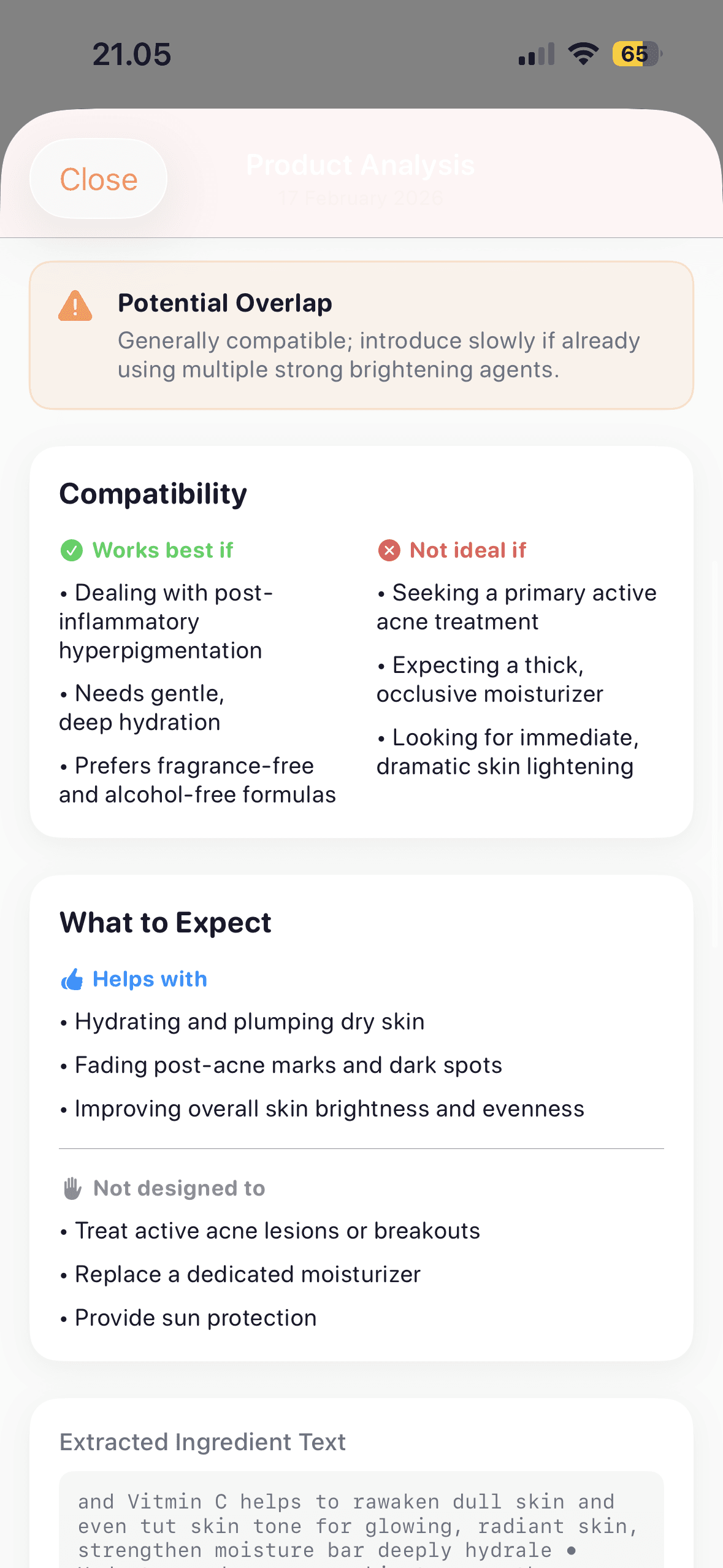
If you're not sure whether your products are behind your breakouts at all, the 2-minute acne trigger quiz is a good place to start.
To see how salicylic acid fits with the rest of your routine, try the free ingredient conflict checker.
Frequently asked questions
What should you not mix with salicylic acid?
Avoid layering salicylic acid with other strong exfoliating or drying acne treatments in the same routine, such as adapalene, tretinoin, retinol, glycolic acid, or lots of benzoyl peroxide. Space them out between morning and night or alternate days, and cut back to one treatment if your skin gets irritated.
Can I use salicylic acid and adapalene together?
Yes, with caution. The Differin gel label advises particular caution when combining it with salicylic acid because both can irritate the skin. Many people use adapalene at night and a salicylic acid cleanser in the morning, and cut back if dryness or stinging starts.
Can I use niacinamide and salicylic acid together?
Yes. Niacinamide is not an exfoliant, so it pairs well with salicylic acid. Apply the salicylic acid first, then niacinamide, then moisturizer.
Can you use salicylic acid with benzoyl peroxide?
Many people can, but both are over-the-counter acne medicines, and the FDA-required label warns that irritation and dryness are more likely when you use two topical acne medications at once. If irritation occurs, use one at a time.
Can you use salicylic acid every day?
Many people can use a salicylic acid cleanser daily. Leave-on products are stronger, so start a few times a week and build up. Use less often if you are also using a retinoid or another acid.
Can I use salicylic acid and vitamin C in the same routine?
You can, but sensitive skin often stings when two acidic products are layered. The simplest split is vitamin C in the morning with sunscreen and salicylic acid at night.
This article is for general education and isn’t medical advice. If your acne is severe, painful, scarring, or not improving, see a board-certified dermatologist.